Top 10 Global Office Desk Suppliers (2026): How to Choose the Right Supplier
Author: Xinda Clover
Quick Answer: How Should Buyers Compare Office Desk Suppliers?
When evaluating office desk suppliers, buyers should look beyond brand reputation. Product range, customization capabilities, project experience, manufacturing capacity, and after-sales support are often more important than rankings alone.
For most commercial projects, the best supplier is the one that can consistently deliver the right products, documentation, and support for your specific project requirements.
Criteria
Why It Matters
Product Range
Supports multiple workspace needs from a single source
Customization
Adapts to project-specific dimensions and specifications
Manufacturing Capacity
Ensures reliable delivery at your required scale
Project Experience
Reduces sourcing risk, especially for international orders
Certifications
Meets compliance requirements for your market
Top 10 Global Office Desk Suppliers
1. Steelcase (USA)
Overview: Founded in 1912, Steelcase is the global benchmark for research-backed workplace design. Their proprietary workplace utilization data shapes every product recommendation, making them a genuine strategic partner — not just a furniture vendor.
Overview: Founded in 1905, Herman Miller (now part of MillerKnoll) defined the ergonomic furniture category. Their human-centered design philosophy extends from seating to workstation systems and executive furniture.
Best For: High-end executive suites, organizations using workspace quality as a talent-attraction signal, ESG-conscious projects requiring transparent supply chain documentation.
Overview: Founded in 1948, Haworth built their reputation on adaptive workplace systems — furniture that reorganizes without construction. Their 120+ country presence makes them one of the most globally accessible enterprise suppliers.
Key Products: Compose and Planes workstation systems, Enclose and Trivati architectural walls, Pergola freestanding architecture, height-adjustable desks.
Best For: Organizations managing active hybrid work transitions, phased workspace redesigns, LEED-pursuing projects.
Overview: Founded in 1950, Vitra holds manufacturing rights to iconic designs (Eames, Prouvé, Morrison) and applies Swiss manufacturing precision to contemporary office furniture.
Overview: Founded in 1991 and operating in 100+ countries, Sunon combines large-scale manufacturing with genuine innovation in smart desk technology and sustainable materials.
Best For: Tech company HQs requiring smart desk infrastructure, LEED or Green Star certified projects, large-volume deployments where manufacturing capacity is the priority.
Overview: Founded in 1945, Okamura brings Japanese manufacturing precision — tight tolerances, consistent finishes, strict quality control — to commercial office furniture at scale.
Overview: Founded in 1941, KI has built specific product lines for education, healthcare, and government procurement — sectors where specification, compliance, and delivery timelines operate differently from commercial office purchasing.
Key Products: Strive and Intellect Wave training tables, collaborative furniture, workstation systems, healthcare seating.
Best For: US federal and state government projects (GSA Schedule holder), university and college fit-outs, K-12 education, hospital and healthcare facilities.
Overview: Founded in 1938, Knoll’s furniture references Bauhaus and modernist design traditions while meeting contemporary workplace performance requirements. Post-merger with Herman Miller, Knoll operates as the premium design-focused brand within the MillerKnoll portfolio.
Overview: Founded in 1942, Kinnarps is one of Europe’s largest furniture manufacturers by volume. Their sustainability commitments — 100% renewable energy in manufacturing, full lifecycle transparency — set a benchmark for responsible sourcing.
Best For: European corporate offices with active ESG programs, Nordic public sector procurement, projects requiring full product lifecycle documentation.
Overview: Founded in 1990, Clover Furniture has delivered modular workstation systems, executive furniture, and office partitions to commercial projects in 50+ countries. Our core manufacturing capability — aluminum profile extrusion and modular system production — means we build to project-specific dimensions, not just catalog sizes.
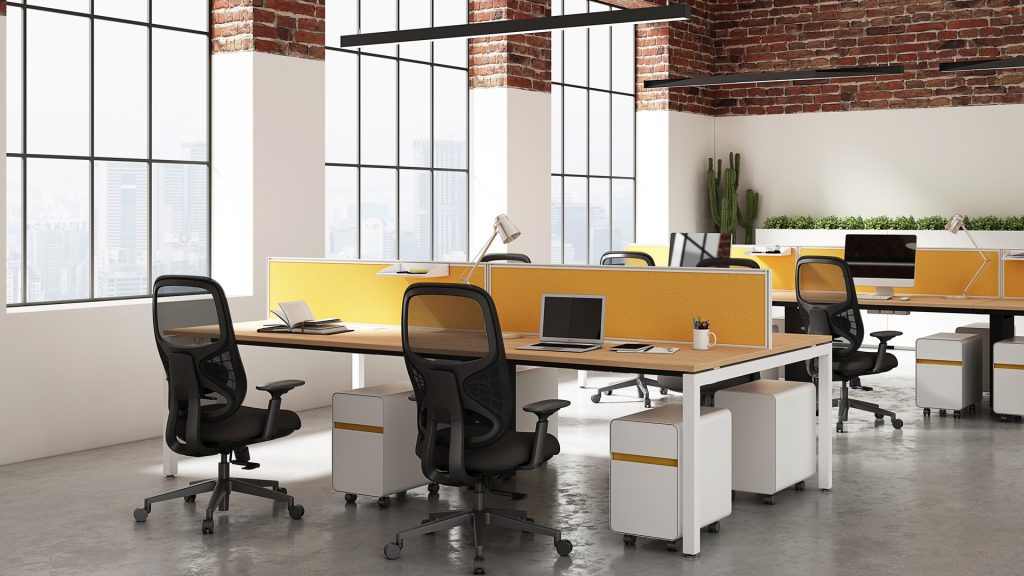
Key Products: T3 Modular Panel Workstation System, SLH Bench Workstation, height-adjustable desks (single and L-shaped), executive desk collections, conference tables, training tables, workspace partitions. All manufactured under ISO 9001 and ISO 14001 certification.
Best For: International B2B projects requiring custom specifications, procurement teams evaluating total landed cost, organizations needing a single-source partner for workstations, partitions, and seating.
How do I choose an office desk supplier for a commercial project?
Evaluate suppliers on product range, customization capability, manufacturing capacity, certifications, and export track record in your country. Brand recognition matters less than documented experience delivering projects of your scale and location. Always request references from completed projects in your region before committing to a supplier.
What is the difference between workstation desks and executive desks?
Workstation desks are modular systems designed for shared open-plan floors — prioritizing scalability, integrated cable management, and consistent specification across many seats. Executive desks are standalone pieces for private offices, prioritizing storage capacity and premium material quality. They serve different environments and are not interchangeable.
Which desk type works best for open-plan offices?
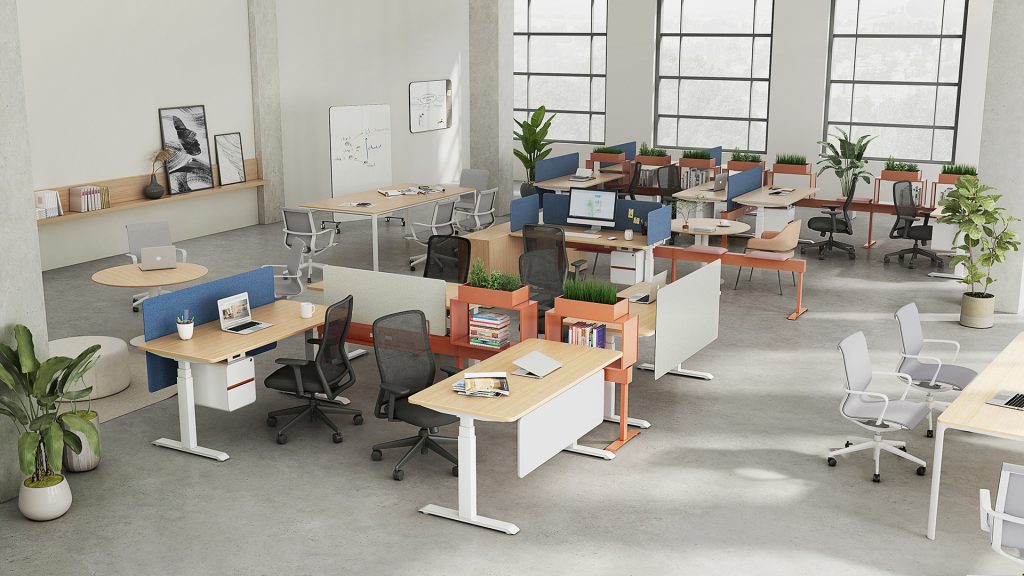
Workstation desk systems or bench workstations. Workstation systems with panel separators provide individual workspace definition and acoustic separation. Bench workstations — continuous open surfaces — maximize seat density for collaborative teams. The right choice depends on your privacy and acoustic requirements, not aesthetics.
What information should I prepare before requesting a quote?
Project location, desk types and quantities required, per-workstation dimensions, power and data requirements, delivery timeline, and a floor plan or layout sketch if available. A complete brief typically reduces supplier response time from 2–3 weeks to 2–3 business days.
Can office desks be customized for large commercial projects?
Yes — most manufacturers in this list offer some level of customization, but the depth varies significantly. Heritage brands (Steelcase, Herman Miller, Haworth) offer structured customization within established product lines. Manufacturers like Clover Furniture provide full OEM/ODM capability, meaning non-standard dimensions, project-specific finishes, and bespoke configurations are standard practice, not exceptions.
Why Buyers Choose Clover Furniture
Clover Furniture provides commercial office desk solutions for projects worldwide — including workstation systems, executive desks, conference tables, training tables, and custom office furniture manufactured to project specifications.
Need Help Selecting the Right Office Desk Supplier?
Whether you’re sourcing desks for a corporate office, educational facility, or commercial project, our team can help you identify the right products and provide project-specific recommendations.