Office Desk Types Explained: Which Desk Is Right for Your Workspace?
Author: Xinda Clover
Most people searching for office desk types are not building a furniture encyclopedia. They’re making a decision: which desk works for this office, and what do I need to specify before we order?
This guide answers that question in order — from a quick-reference table you can use right now, to detailed type-by-type guidance, an expert recommendation from our project team, and a ready-to-use RFQ checklist.
Quick Answer: Match Your Workspace to the Right Desk Type
Workspace Type
Recommended Desk
Why
Open-plan corporate office
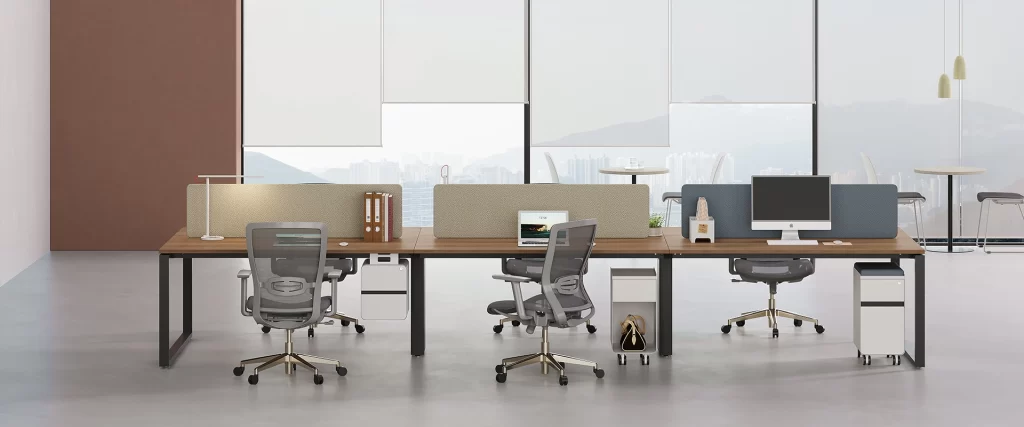
Workstation Desk System
Scalable, panel-separated, cable-managed
Executive / private office
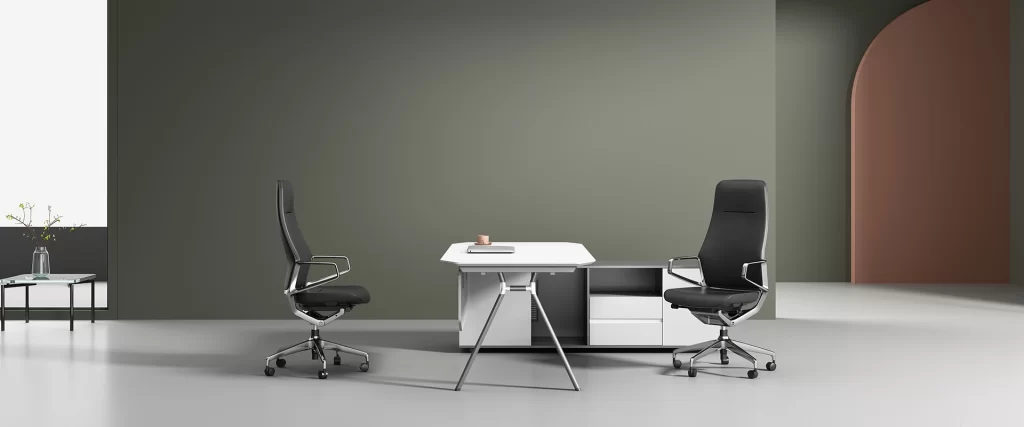
Executive Desk
Authority, storage capacity, premium finish
Meeting room / boardroom
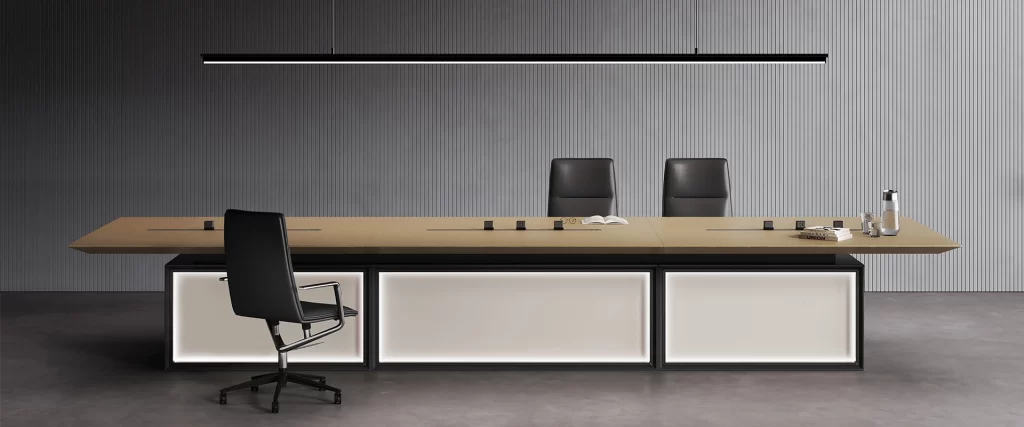
Conference Table
Group capacity, tech integration, hierarchy
Training / multipurpose room
Training Table
Foldable, nestable, fast reconfiguration
Hybrid / ergonomic office
Height-Adjustable Desk
Sit-stand flexibility, health compliance
Small office / individual
Writing or L-Shaped Desk
Space efficiency, minimal footprint
Startup / coworking
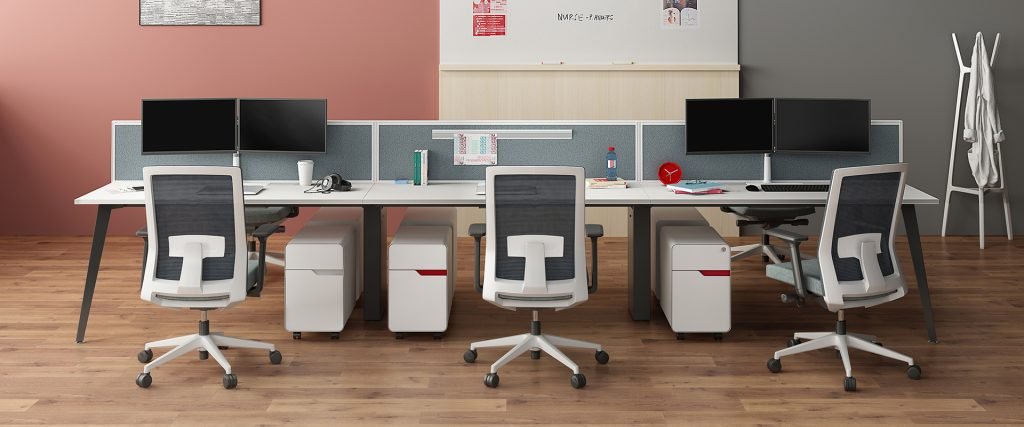
Bench Workstation
Maximum seat density, modular growth
Procurement teams: If your project is 10+ workstations, jump to the RFQ Checklist and prepare before requesting quotes.
Procurement Decision Tool
Four questions that narrow your desk type selection before you review a single product.
1. How many people will use the space?
1 person → Writing Desk, Executive Desk, or Standing Desk
2–10 people → Workstation System or Bench Workstation
10+ in a shared room → Conference Table (meetings) or Training Tables (instruction)
2. Does the work require collaboration?
Daily → Bench Workstation or low-panel Workstation System
Occasionally → Workstation System + shared Conference Table
No — individual focus → Executive Desk or private Standing Desk setup
3. Will the layout change in the next 1–3 years?
Yes → Standing Desks (relocatable), Training Tables (foldable), Workstation Systems (demountable)
No — fixed layout → Executive Desk or Conference Table
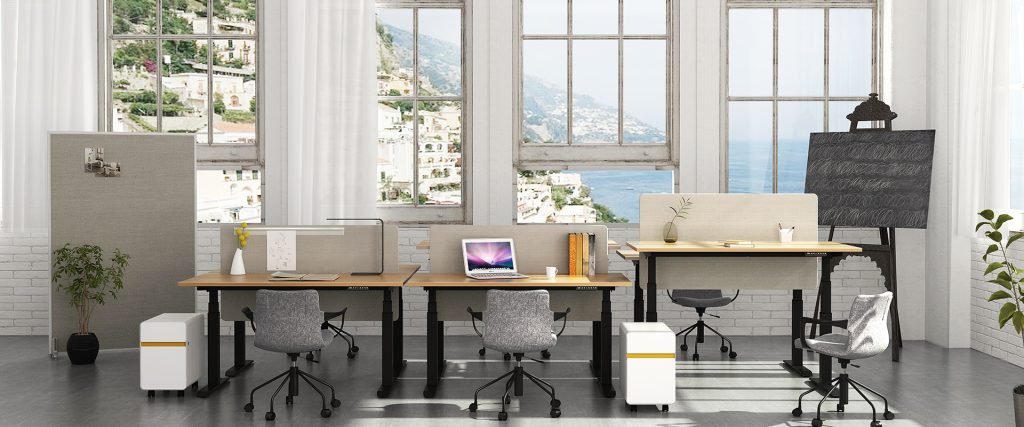
What it is: A modular desk-and-panel system that creates defined individual workspaces inside an open floor plan. Panels range from desk-height screens (visual separation) to full-height partitions (acoustic separation), expanding as your team grows.
Who it’s for: Corporate offices, contact centers, government agencies — any environment where 10+ employees share an open floor and each needs a defined personal workspace.
Why it works:
Cable management is built into the panel core — no exposed wires, no external trays
Modular connections let you add workstations to an existing cluster without disturbing what’s installed
Mix panel materials (fabric, glass, laminate, acoustic) to tune privacy and acoustics per zone
RFQ information needed: Seat count · Panel height · Cable management type · Power/data requirements
What it is: A large-format, storage-rich desk for private offices. Executive desks prioritize workspace authority and organizational capacity — typically featuring a filing pedestal, a credenza return, and a broad primary surface.
Who it’s for: C-suite executives, senior managers, partners at law and financial firms — any role where the office environment communicates authority to clients and colleagues.
Why it works:
Built-in storage keeps the private office uncluttered without separate filing cabinets
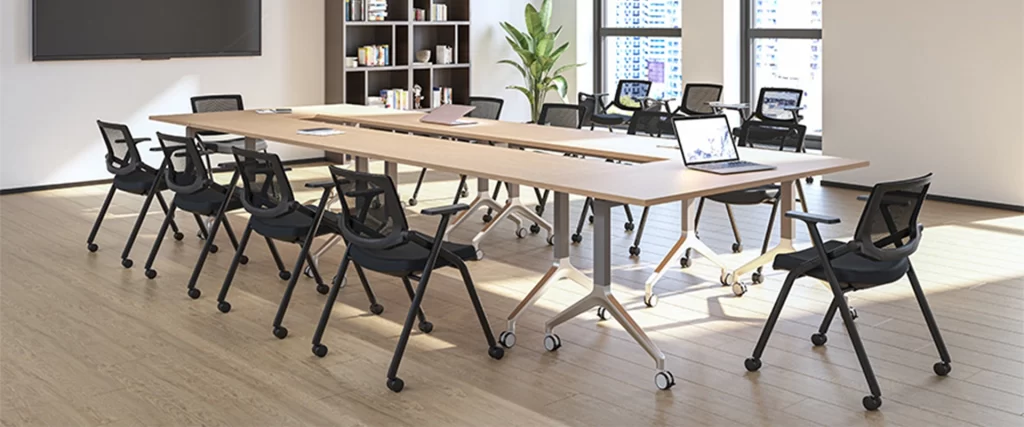
What it is: A shared work surface built for group meetings, presentations, and decision-making. Conference tables range from 6-person rectangular tables to 20+ person boat-shaped boardroom tables, with integrated power and data for technology-enabled sessions.
Who it’s for: Corporate meeting rooms, boardrooms, government council chambers, hotel conference facilities — any space where groups of 6 or more meet regularly.
What it is: A lightweight, foldable work surface built for rooms that change function throughout the week. Training tables fold flat for storage and reconnect in minutes into classroom, U-shape, or collaborative layouts.
Who it’s for: Corporate L&D departments, educational institutions, government training facilities, hotel conference rooms — any space that reconfigures regularly.
Why it works:
A 40-person setup can be cleared to open floor in under 30 minutes with two staff
Modular widths (24″–36″) give precise control over density and aisle clearance
Caster integration eliminates heavy lifting during reconfiguration
RFQ information needed: Folding mechanism type (T-leg vs. X-leg) · Stack height for storage planning · Surface width per person (24″ min / 30″ recommended)
What it is: A desk with a motorized or hand-crank mechanism adjusting the work surface from seated (24″) to standing (50″) height, with electric models offering programmable presets for multiple users.
Who it’s for: Organizations with ergonomic programs, hybrid workplaces, any role where employees spend 6+ hours daily at a desk.
Why it works:
Reduces musculoskeletal disorder claims — MSD incidents average $15,000–$30,000 each in North American workplaces
Programmable presets allow multiple users to share the same desk without manual re-adjustment
Available as standalone stations or integrated into open-plan workstation systems
RFQ information needed: Height range needed (min sitting / max standing) · Motor type (single vs. dual) · Lift capacity for monitor setups · Noise level tolerance
What it is: A compact single-surface desk (writing desk) or extended L-return configuration (L-shaped desk) for individual contributors who need workspace efficiency without executive-level storage.
Who it’s for: Individual contributors in space-limited offices, home office programs, first-office fit-outs for smaller businesses.
Why it works:
Writing desks are the fastest to specify and deploy — minimal configuration, straightforward installation
L-shaped configurations effectively double surface area within the same corner footprint
Both integrate cleanly with standalone pedestals and monitor arms added later
RFQ information needed: Width × depth · Return direction (left-hand or right-hand, reversible or fixed)
What it is: A continuous linear surface shared by multiple users, with minimal or no dividers between seats — the highest seat-density configuration for collaborative open-plan environments.
Who it’s for: Startups scaling quickly, creative agencies, coworking spaces — any environment prioritizing team proximity over individual acoustic privacy.
Why it works:
Accommodates 4–6 users in the space a traditional cubicle layout uses for 2
Easy to extend — add one more bay without disrupting adjacent workstations
A single cable tray runs the full bench length, feeding all workstations from one infrastructure point
RFQ information needed: Bay width per person (48″ min / 54″–60″ recommended) · Screen privacy requirement (height, if any) · Surface material (laminate vs. solid surface)
After supplying desk systems to commercial projects across North America, the Middle East, Southeast Asia, and Europe, our project team consistently observes the same pattern: desk type selection has a greater long-term impact on workspace efficiency than desk finish or color choice.
Organizations that specify workstation systems for open floors and reserve executive desks for private offices consistently report higher space utilization, fewer reconfiguration costs, and lower per-seat furniture spend over a 5–8 year period. The most common mistake we see is applying executive desk thinking to open-plan floors — oversized, storage-heavy desks that consume 40% more floor space per employee than a purpose-built workstation system, without delivering proportionally more productivity.
If you’re specifying for 20+ workstations and are unsure which configuration suits your floor plan, request a CAD layout review before committing to an order. We provide this as standard on projects of that scale.
What are the most popular office desk types for commercial workspaces?
The most commonly specified desk types in commercial environments are workstation desk systems (open-plan floors), executive desks (private and management offices), conference tables (meeting rooms), and height-adjustable standing desks (ergonomic programs). Training tables are standard for organizations with dedicated learning facilities. The right combination depends on your headcount, floor layout, and how each zone needs to function — not on product popularity.
What is the difference between a workstation desk and an executive desk?
A workstation desk is designed for shared open-plan environments — scalability, integrated cable management, and consistent specification across multiple seats. An executive desk is designed for a single private office — storage authority, premium finish, and a work surface sized for documentation-intensive roles. Workstations are specified by team size and panel configuration; executive desks are specified by room dimensions and finish requirements. They serve different environments and are rarely interchangeable.
Which office desk type is best for a small office?
For spaces under 500 sq ft, L-shaped desks maximize corner area efficiently. For teams of 4–8, a bench workstation fits more seats per square foot than traditional cubicles. If the room also serves as a meeting space, folding training tables that store flat give you the most versatile square footage. Avoid large executive desks in shared small offices — the storage bulk is better replaced by a compact writing desk plus a standalone mobile pedestal.
How do I choose the right office desk size?
Match size to the equipment and tasks the desk needs to support. Laptop-only work: 48″ wide, 24″ deep. Single monitor: 48″–60″ wide, 24″–30″ deep. Dual monitors: 60″–72″ wide, 28″–30″ deep. Executive roles: 72″–84″ wide, 30″–36″ deep. For conference tables, allow 24″–30″ of width per seated person. Always verify the desk fits through elevator and door openings before ordering — particularly for L-shaped desks and large conference tables.
Are standing desks worth the investment for commercial offices?
For employees working 6+ hours daily at a fixed position, height-adjustable desks deliver measurable ROI. Musculoskeletal disorder claims average $15,000–$30,000 per incident in North American workplaces; electric standing desks reduce prolonged static posture, which is the primary risk factor. The typical upfront premium over a fixed-height desk (30–60%) is recoverable within 2–3 years through avoided MSD costs alone. For shared-desk environments, programmable electric models are strongly recommended over manual crank designs.
What is the difference between a workstation system and a bench workstation?
A workstation system includes panel dividers between seats, integrated cable management, and optional overhead storage — creating a defined personal territory for each user. A bench workstation is a continuous open surface with minimal or no dividers, prioritizing seat density and team visibility over individual privacy. Workstation systems suit environments with data privacy requirements or roles needing concentration; bench workstations suit creative teams and startups where proximity and spontaneous collaboration are the priority.
How long does commercial office desk installation typically take?
Writing and executive desks: 1–2 hours per desk with two people. Workstation systems: 4–6 hours per 10-seat cluster for trained installers. Conference tables: 2–4 hours per table depending on size and tech integration. Training tables are user-configured at time of use — no installation required. For 50+ workstation projects, allocate 3–5 installation days and coordinate your cabling contractor to arrive before the furniture team.
Find the Right Desk for Your Project
Whether you’re outfitting a 200-person corporate campus, a 10-person startup office, or a new training facility, Clover Furniture supplies commercial-grade desk systems, conference tables, executive furniture, and height-adjustable solutions — manufactured to consistent quality standards and delivered across 50+ countries.