Modern workplaces must balance open collaboration with focused privacy.
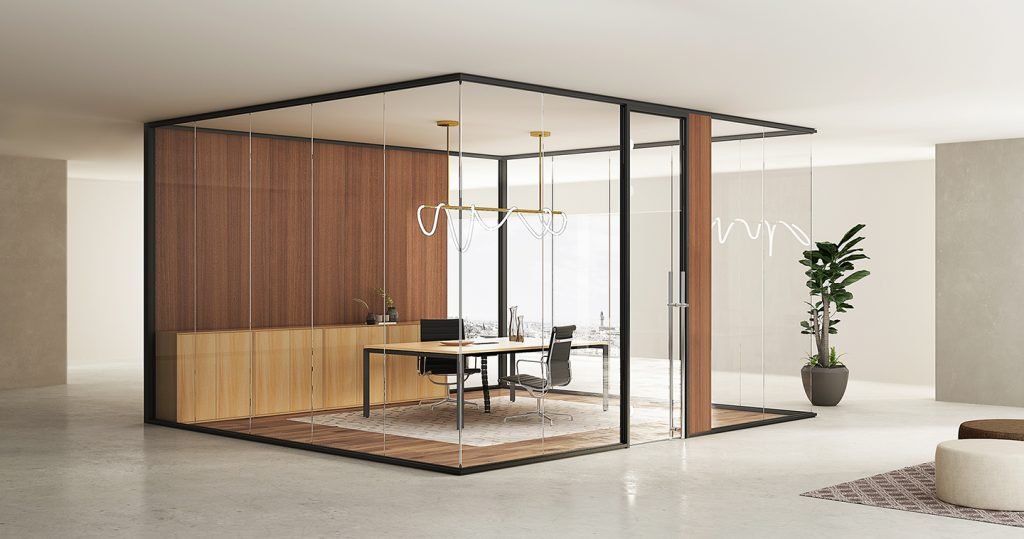
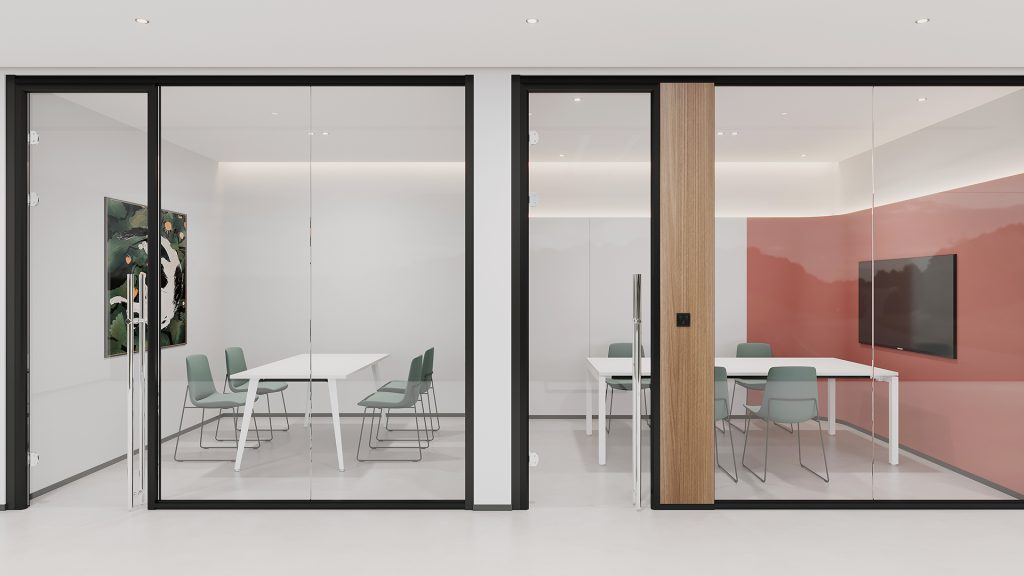
A glass partition wall system is one of the most effective solutions for contemporary office design. It allows natural light to flow through the workspace while clearly defining functional areas. Combining architectural aesthetics with acoustic performance, it has become a preferred choice for hybrid office environments worldwide.
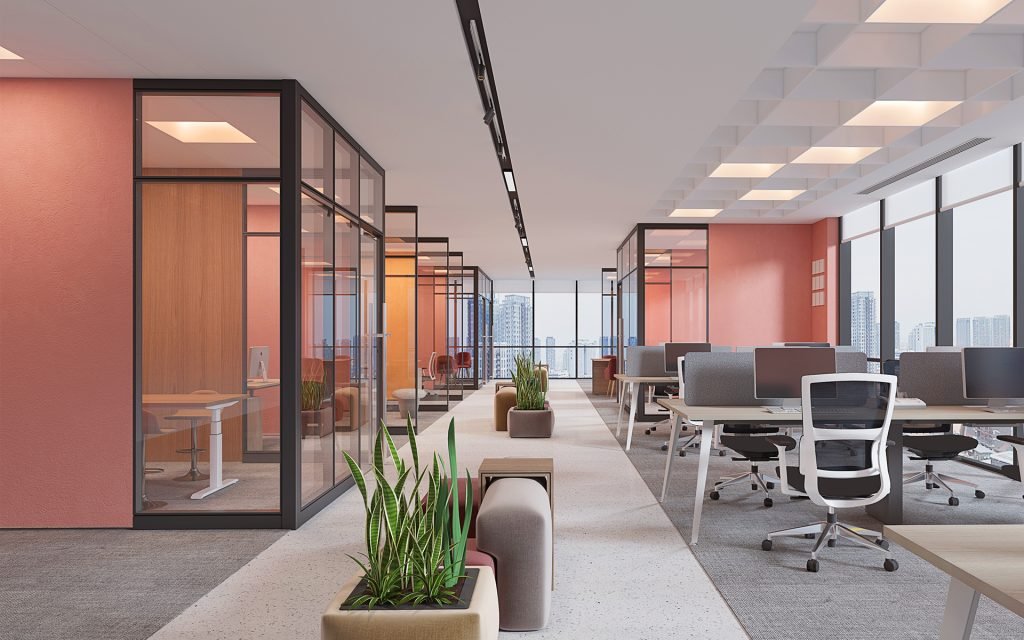
Unlike traditional solid walls, glass partitions create visual openness while still supporting structured zoning—making offices feel larger, brighter, and more efficient.
Why glass partitions improve office environments:
Open-plan offices often suffer from noise distractions and lack of privacy. Glass partition systems act as a transparent boundary—maintaining visual connectivity while reducing noise and improving focus when needed.
This guide provides a comprehensive overview of materials, safety standards, acoustic ratings, system configurations, and installation engineering, designed for architects, contractors, and commercial procurement teams.
2. Four Core Advantages of Glass Partition Walls
High Transparency & Energy Efficiency
Up to 80% light transmission
Reduces reliance on artificial lighting
Helps reduce energy consumption by 20%–30%
Visual Connectivity
Maintains open sightlines across teams
Eliminates the “boxed-in” feeling of solid walls
Enhances collaboration and communication
Acoustic Performance (STC Rated)
Available STC 35–50 sound insulation levels
Effectively reduces office noise interference
Suitable for both open and private spaces
Modular Flexibility & Fast Installation
Minimizes business downtime
Reconfigurable and reusable system design
Ideal for office expansion or relocation
Factory-prefabricated modules for rapid on-site assembly
STC 35 (Single Glazing): Basic office zoning, open work areas
STC 45 (Double Glazed): Standard conference room insulation
STC 40–48 (Laminated Glass): PVB interlayer absorbs human voice frequencies, ideal for executive and financial rooms
Optional Upgrades:
Built-in blinds
Privacy frosted film
Smart switchable glass (instant opacity control)
7. Quantified Business Benefits
Implementing glass partition systems delivers measurable ROI:
Noise reduction: Up to 25% fewer noise complaints
Energy savings: Up to 30% reduction in lighting costs
Cost efficiency: Up to 30% lower renovation cost compared to drywall systems
Faster deployment: Reduced office downtime during construction
8. Modular System Engineering Logic
Modular “block system” design for fast assembly
Tool-based installation with standardized components
Fully removable and reusable panels
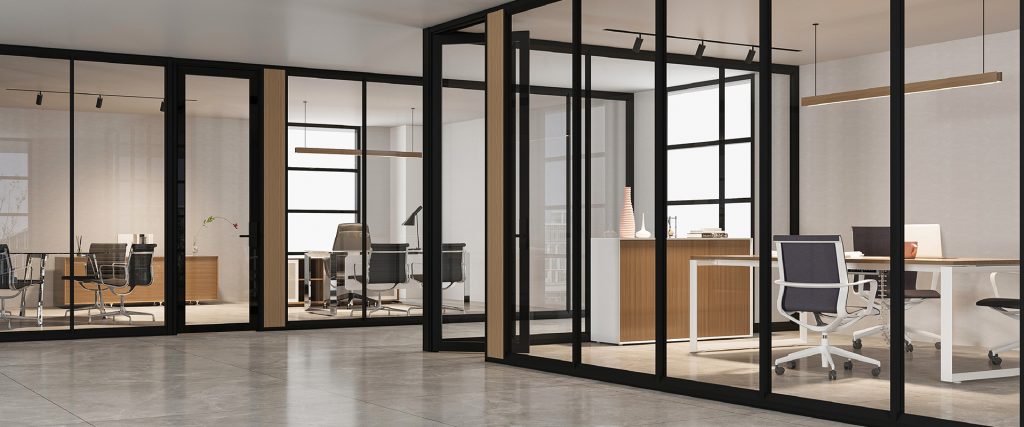
Compatible with both framed and frameless systems
Enables unified office design across multiple layouts
9. Floor Leveling Adjustment System
Designed for uneven building surfaces:
Built-in ±15mm leveling adjustment screws
Eliminates need for wood shims or cutting modifications
Ensures perfect vertical alignment and structural stability
Prevents stress cracks caused by uneven load distribution
10. Global Installation & Support Services
Domestic Projects
Professional on-site installation teams
Standardized procedures with high precision execution
International Projects
Remote installation support via video guidance and manuals
Real-time technical assistance
Overseas on-site installation teams available for large-scale projects
Frequently Asked Questions (FAQ)
Q1: What is the benefit of ICC-ES certification?
ICC-ES certification ensures compliance with international building standards. It simplifies permit approvals and reduces the need for additional structural testing, helping accelerate project timelines.
Q2: Are glass partition walls really fast to install?
Yes. Thanks to modular prefabrication, installation only requires dry assembly on-site. Most projects are completed within 1–3 days, with minimal noise and zero wet construction.
Q3: What if the floor is uneven?
The system includes a ±15mm leveling mechanism, allowing installers to adjust height precisely for stable and secure installation without structural stress.
Q4: Are frameless glass partitions safe?
Yes. Frameless systems use reinforced tempered glass and concealed structural tracks. When installed full-height, they meet strict safety and stability standards.
Q5: Can the system be relocated?
Yes. The modular structure allows full disassembly, relocation, and reinstallation without material damage—reducing future renovation costs by up to 30%.
The Smart Choice for Your Ideal Workspace
As a core element of modern office design, premium glass partition walls enhance spatial aesthetics. Through scientific acoustic design and flexible layouts, they create a more efficient, comfortable, and employee-friendly environment. Choosing the right system means choosing a smarter, more sustainable way to work.
Our professional team, backed by rich global project experience, delivers customized solutions for enterprises of all sizes—from product selection to installation support.