Office Desk Types: How to Choose the Perfect One for Your Workspace

Author: Xinda Clover

desk workstation

🖥️ The Ultimate Guide to Choosing the Right Office Desk

Your desk is more than just a piece of furniture; it is the “command center” that boosts your productivity. Whether you are setting up a home office, furnishing a corporate workspace, or renovating a shared co-working area, the right desk allows you to work with greater focus and comfort, and can even improve your mood.

The market offers a vast array of desks, each designed for specific needs and spaces. Choosing the right one can feel overwhelming. Don’t worry—this guide details the most common desk types, key factors to consider, and practical advice to help you make a smart choice.


🪑 Common Desk Types: Pros, Cons & Use Cases

Before diving into selection criteria, let’s explore the main desk types and their purposes. Each has unique characteristics to suit different work styles, space constraints, and functional needs.

1. Standard Writing Desk

The classic writing desk is a timeless choice. It features a flat surface and a simple structure with minimal ornamentation. Usually rectangular (though square or oval styles exist), its primary function is to provide ample workspace without unnecessary frills.

  • Pros: Compact design, budget-friendly, versatile (suitable for basic computer work, writing, or simple administrative tasks), easy to fit into small spaces or existing decor.
  • Cons: Limited storage (no built-in drawers or shelves), may not support heavy equipment (like multiple monitors or printers) without reinforcement.
  • Best For: Home offices with limited space, students, laptop-based freelancers, and those who prefer a minimalist workspace.

2. Executive Desk

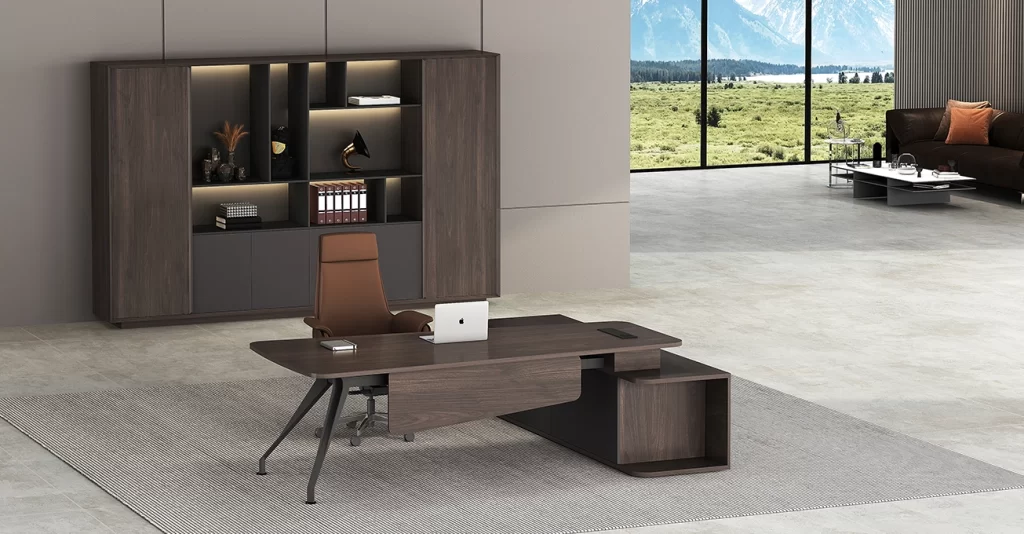
Designed to exude authority and comfort, the executive desk typically features a large surface (often L-shaped or rectangular) and abundant built-in storage (drawers, filing cabinets, credenzas). These desks are usually made from high-quality materials like solid wood or premium veneers.

  • Pros: Spacious work area (easily fits multiple monitors, files, and supplies), ample storage (great for organizing documents), sturdy, durable, and aesthetically pleasing (adds a professional touch to any space).
  • Cons: Expensive, bulky (requires a large office footprint), may feel overwhelming in a small home office.
  • Best For: Corporate executives, managers, professionals handling large volumes of paperwork, and those seeking a luxurious, professional workspace.

3. L-Shaped Desk

An L-shaped desk consists of two connected surfaces forming an “L,” maximizing corner space. It often features built-in storage (drawers, shelves, or filing cabinets) on one or both sides.

  • Pros: Maximizes corner space (ideal for small or irregularly shaped offices), allows for zoning different work areas (e.g., one side for the computer, the other for writing or meetings), large surface area for multiple monitors or devices.
  • Cons: Can be difficult to move due to its shape, requires sufficient floor space to accommodate both surfaces, built-in storage at the corner might restrict legroom.
  • Best For: Gamers (needing space for multiple monitors and gear), remote workers needing a separate work and meeting zone, and multitasking professionals (e.g., graphic designers, video editors).

4. Height-Adjustable Desk (Sit-Stand Desk)

A height-adjustable desk (also known as a sit-stand desk) allows you to switch between sitting and standing positions. It comes in manual (crank-operated) and electric (motor-driven) versions, with some electric models offering programmable height presets.

  • Pros: Promotes good ergonomics (reduces back pain, improves posture, boosts circulation), increases energy and productivity (standing reduces fatigue during long work hours), customizable to different body types.
  • Cons: More expensive than standard desks (electric versions cost more than manual ones), may require additional accessories for optimal comfort (like anti-fatigue mats or monitor arms), manual versions can be cumbersome to adjust.
  • Best For: People who work long hours at a desk (to avoid sedentary behavior), those with back or neck pain, health-conscious professionals, and remote workers prioritizing wellness.
height adjustable table

5. Corner Desk

Similar to an L-shaped desk but specifically designed to fit snugly into a corner, the corner desk is more compact and space-saving. It usually has a smaller footprint than an L-shaped desk and may offer basic storage features.

  • Pros: Maximizes corner space (frees up central floor space), compact design (perfect for small home offices or bedrooms), creates a focused work area that reduces distractions.
  • Cons: Smaller surface area compared to an L-shaped desk, legroom might be restricted, fewer storage options than executive or L-shaped desks.
  • Best For: Small apartments, home offices converted from bedrooms, and those looking to maximize space without compromising on a dedicated work zone.

6. Floating Desk (Wall-Mounted Desk)

A floating desk is attached directly to the wall without legs, offering a sleek, modern look and saving floor space. Available in various sizes and styles, from simple shelves to fold-down versions (ideal for tiny spaces).

  • Pros: Space-saving (great for studio apartments or small rooms), easy to clean under the desk, modern and minimalist design (complements contemporary decor), fold-down versions can be stowed away when not in use.
  • Cons: Limited weight capacity (cannot support heavy equipment), requires proper wall installation (may not be suitable for rentals), lacks built-in storage (requires additional shelves or drawers).
  • Best For: Renters (fold-down versions), studio apartments, small homes, and those looking to create a minimalist, multi-functional space (e.g., a desk that doubles as a console table).

🔑 Key Factors to Consider When Buying a Desk

Once you have identified a desk type that fits your work style, use the following key factors to narrow down your choice and ensure you find the perfect desk for your workspace.

1. Available Space

First, measure your workspace carefully. Note the length, width, and height of the area (measure ceiling height if considering a tall desk or a height-adjustable desk). Also, consider traffic flow—ensure there is enough room around the desk (at least 30 inches of clearance on each side). For small spaces, prioritize compact desks like writing desks, corner desks, or floating desks. For larger offices, an executive or L-shaped desk might be more appropriate.

2. Work Style and Functional Needs

Your daily tasks will determine your desk’s functional requirements. Ask yourself:

  • Do you primarily use a laptop, or do you need space for multiple monitors and a desktop PC?
  • Do you handle a lot of paper files (requiring file storage)?
  • Do you need a dedicated area for meetings or collaboration?

Examples:

  • Gamers or Video Editors need a large surface (L-shaped or height-adjustable) for multiple monitors and gear.
  • Lawyers or Administrators need built-in file storage (executive or L-shaped desks with drawers).
  • Frequent Travelers/Freelancers might prefer a fold-down floating desk (saves space when not working).

3. Ergonomic Design

Ergonomics are crucial for long-term comfort and health. A poorly designed desk can lead to back pain, neck strain, and carpal tunnel syndrome. Key ergonomic considerations include:

  • Height: The ideal desk height allows your elbows to be at a 90-degree angle when your hands are on the keyboard. For most adults, this is between 28–30 inches. If you are tall or short, a height-adjustable desk is a great option.
  • Desktop Depth: Ensure the desk is deep enough to support your monitor (at least 24 inches deep so the screen is 18–24 inches from your eyes).
  • Legroom: The desk should provide at least 24 inches of width and depth underneath to avoid cramped postures.

4. Storage Needs

Consider how much storage you need to keep your workspace tidy. If you have many files, supplies, or devices, choose a desk with built-in drawers, filing cabinets, or shelves (executive or L-shaped desks). If you prefer a clean look or have few supplies, a simple writing desk or floating desk may suffice. You can also add external storage (like bookshelves or filing cabinets) to a basic desk as needed.

5. Materials and Durability

The desk’s material affects its durability, appearance, and price. Common materials include:

  • Solid Wood: Sturdy, durable, beautiful, and long-lasting—ideal for executive desks. However, it is expensive and heavy.
  • Veneer: More affordable than solid wood with a similar look. It is less durable than solid wood but sturdy enough for daily use.
  • Particleboard/MDF: Budget-friendly, but less durable (prone to scratches and water damage). Look for laminate finishes for added protection.
  • Metal: Sturdy, easy to clean, suitable for industrial-style spaces or high-traffic areas. It can feel cold and is heavy.

Choose a material based on your budget and usage. If you use the desk heavily, invest in something durable (solid wood, metal). If it’s for light/occasional use, particleboard or veneer may be sufficient.

6. Budget

Desk prices vary greatly, ranging from under 100(basicwritingdesksorparticleboardstyles)toover100(basicwritingdesksorparticleboardstyles)toover 1000 (executive desks, premium height-adjustable desks). Set a budget before shopping and prioritize essential features (ergonomics, storage) over luxury upgrades (premium wood finishes). Remember, a high-quality desk is an investment; choosing a durable model saves you money in the long run (as you won’t need to replace it frequently).

7. Aesthetics and Decor Style

Your desk should complement your workspace’s existing decor. Consider the desk’s style (modern, traditional, industrial, minimalist) and color (wood tones, black, white, metal) to ensure it matches your space. For example:

  • Floating desks or height-adjustable desks with metal frames suit modern, minimalist spaces.
  • Solid wood executive desks suit traditional or classic offices.
  • Metal desks with distressed finishes suit industrial-style co-working spaces.

💡 Practical Tips for Making the Final Choice

After narrowing down your options using the factors above, use these tips to make your final decision:

  1. Test it Out (If Possible)
    If you are buying from a physical store, sit down and test the height, surface area, and legroom. For online purchases, read customer reviews to learn about real-world comfort and durability.
  2. Consider Future Needs
    Choose a desk that can adapt to changes in your work style. For example, if you might work remotely long-term, investing in a height-adjustable desk is wise; if your tasks might increase, an L-shaped desk can accommodate more monitors.
  3. Check Assembly Requirements
    Some desks are complex to assemble (especially executive or L-shaped desks). If you are not handy, consider buying a pre-assembled model or budgeting for professional assembly services.
  4. Check the Warranty
    A good warranty (1–5 years) indicates the manufacturer’s confidence in their product. Review the warranty terms to ensure it covers material or workmanship defects.

🎯 Conclusion

Choosing the right desk requires balancing function, ergonomics, space, and style. Start by understanding different desk types and their use cases, then evaluate your specific needs (space, work style, storage). This way, you can narrow your choices and find a desk that boosts your efficiency and comfort.

Remember, your desk is a long-term investment in your work life. Take the time to choose one that fits your needs now and in the future.

Publication date: 2025-12-20

INQUIRY