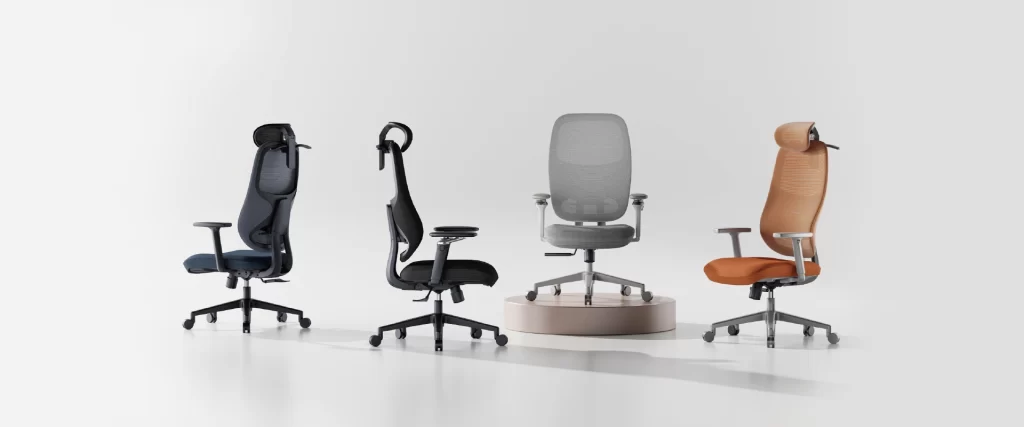
Office Chair Types: How to Choose the Perfect One for Your Workspace
Author: Xinda Clover
Explore different office chair types (ergonomic, mesh, executive, etc.) and learn how to choose the best one for your posture, comfort, and productivity needs.
Why Investing in the Right Office Chair Matters
Many of us spend eight hours or more seated at a desk each day. Your office chair is more than furniture—it’s a vital tool that impacts your health, focus, and well-being.
A poor chair can cause problems. You might experience back pain, neck stiffness, or long-term muscle issues. The right chair supports good posture, reduces strain, and helps you work comfortably and efficiently.
According to the U.S. Bureau of Labor Statistics, many workplace injuries relate to prolonged sitting in unsupportive seats. Slouching or hunching strains your muscles and spine. Over time, this can lead to chronic pain and other health issues.
The right chair also boosts productivity. Discomfort is distracting. A supportive chair lets you focus on your work, not your aches. It can also enhance your workspace’s look, creating a more professional and inviting environment.
The Most Common Office Chair Types: Features and Best Uses
Office chairs are not one-size-fits-all. Each type is engineered with specific features to cater to different work scenarios, body types, and preferences. Below is a detailed breakdown of the most popular office chair types, including their key characteristics, advantages, and who they’re ideal for.
1. Task Chairs: Versatile and Functional
Task chairs are the workhorses of the office world, designed for everyday use in a variety of settings—from home offices and cubicles to conference rooms. They’re characterized by their practicality, affordability, and focus on basic ergonomics, making them a popular choice for individuals who spend 4–6 hours a day seated.
Key Features: Most task chairs include essential adjustments such as height adjustment (to ensure your feet rest flat on the floor and your knees form a 90-degree angle), a swivel base (for easy movement around your desk), and a padded seat and backrest for comfort. Some higher-end models may also offer lumbar support (either built-in or adjustable) and tilt functionality, allowing you to recline slightly to reduce pressure on the lower back.
Task chairs typically have a simple design, with a breathable mesh back or upholstered fabric (such as polyester or nylon) that resists stains and wear. They’re also lightweight and compact, making them easy to move and suitable for smaller spaces.
Advantages: Affordable, versatile, easy to maintain, and suitable for most basic office tasks. Their compact size makes them a great option for home offices or shared workspaces with limited room.
Best For: Freelancers, remote workers, students, and office employees who perform routine tasks like typing, answering emails, or attending virtual meetings. They’re also ideal for secondary workspaces (such as a home office nook) where you don’t spend all day seated.
2. Ergonomic Office Chairs: Designed for Optimal Support
An ergonomic office chair is specifically engineered to support the natural curve of the human spine and promote proper posture, making it the best office chair for long hours—ideal for individuals who spend 6 or more hours a day at their desks. Unlike basic task chairs, ergonomic models offer a wide range of adjustments to customize the chair to your body type and workstyle, ensuring it functions as a truly comfortable office chair.
Key Features: The defining feature of ergonomic chairs is their comprehensive adjustability. This includes: Lumbar Support: Adjustable lumbar support (both height and depth) is a must, as it supports the natural inward curve of the lower back, preventing slouching and reducing strain.Seat Depth and Width Adjustment: Allows you to adjust the length and width of the seat to ensure your thighs are fully supported (with 2–3 inches of space between the edge of the seat and the back of your knees) and your hips fit comfortably.Backrest Adjustment: The backrest height and angle can be adjusted to support the upper back and shoulders, while some models offer a separate headrest (adjustable for height and tilt) to support the neck.Armrest Adjustment: Adjustable armrests (height, width, and angle) allow you to rest your arms comfortably at a 90-degree angle, reducing strain on the shoulders and wrists.Tilt Mechanism: A locking tilt function lets you recline the chair to a comfortable angle (typically 100–110 degrees) while maintaining lumbar support, and some models offer a tilt tension control to adjust how easy it is to recline.
Ergonomic chairs are often upholstered in high-quality fabrics like breathable mesh (which promotes air circulation to keep you cool), leather, or premium fabric blends. They also have a sturdy base (usually made of aluminum or steel) for stability.
Advantages: Provides superior support for long hours of sitting, reduces the risk of musculoskeletal disorders, and can be fully customized to fit your body. The breathable materials and thoughtful design make them comfortable even during extended use.
Best For: Software developers, writers, graphic designers, and other professionals who spend 8+ hours a day at their desks. They’re also ideal for individuals with existing back pain or those who prioritize long-term health and comfort.
3. Executive Chairs: Luxury and Status
Executive chairs (also known as manager chairs) are designed to convey authority and status, making them a common sight in CEO offices, boardrooms, and executive suites. They combine the support of ergonomic chairs with a more luxurious design and premium materials, making them both functional and aesthetically pleasing.
Key Features: Executive chairs typically have a high backrest (often reaching the shoulders or neck) for added support and a more imposing silhouette. Many executive chairs double as a leather office chair, upholstered in genuine leather (or high-quality faux leather) that exudes luxury. They offer many of the same ergonomic adjustments as a premium ergonomic office chair, including lumbar support, seat height adjustment, tilt functionality, and adjustable armrests—qualities that also make them a strong contender for the best office chair for long hours among professionals who value style. The main difference lies in the materials and design, with polished metal or wood accents on the base and armrests enhancing their sophisticated look.
Many executive chairs also feature padded armrests, a contoured seat and backrest, and a heavy-duty base for stability. Some models may include additional luxury features like a built-in massager, heating function, or a footrest.
Advantages: Combines ergonomic support with luxury materials and a professional appearance. Ideal for creating a sophisticated and authoritative workspace.
Best For: Executives, managers, business owners, and anyone who wants to add a touch of luxury to their office. They’re also suitable for individuals who spend long hours seated and value both comfort and style.
4. Conference Chairs: Designed for Collaboration
Conference chairs (or meeting room chairs) are designed for use in conference rooms, boardrooms, and meeting spaces, where individuals sit for shorter periods (1–3 hours) during meetings, presentations, or brainstorming sessions. They prioritize portability, stackability (in some cases), and a professional appearance, while still providing adequate comfort.
Key Features: Conference chairs typically have a fixed or slightly adjustable height (some models offer basic height adjustment, but many are fixed to maintain a uniform look in meeting rooms). They have a padded seat and backrest (often upholstered in fabric or leather) for comfort during shorter sessions, and a sturdy base (either four legs or a five-point swivel base) for stability. Many conference chairs also have armrests (fixed or adjustable) to support the arms during meetings.
Stackable conference chairs are a popular choice for smaller offices or spaces that need to be versatile, as they can be easily stored when not in use. Non-stackable models often have a more polished design, with wood or metal accents to match the decor of a formal conference room.
Advantages: Professional appearance, portable, and suitable for short-term seating. Stackable models save space when not in use.
Best For: Conference rooms, boardrooms, meeting spaces, and training rooms. They’re ideal for businesses that host frequent meetings and need seating that is both functional and aesthetically consistent.
5. Gaming Chairs: Style and Support for Extended Sessions
Originally designed for gamers who spend hours playing video games, gaming chairs have become increasingly popular in office settings—especially among younger professionals, remote workers, and individuals who want a chair that combines style with support. They’re known for their bold designs, racing-inspired silhouettes, and robust ergonomic features.
Key Features: Gaming chairs typically have a high, contoured backrest (often with a built-in headrest and lumbar pillow) that supports the entire spine, from the lower back to the neck. They offer a wide range of adjustments, including seat height, tilt (many can recline up to 180 degrees, allowing you to lie flat for a break), armrest adjustment (height, width, and angle), and sometimes a recline lock to keep the chair in your preferred position.
Gaming chairs are upholstered in a variety of materials, including faux leather (the most common, due to its durability and easy maintenance), mesh, and fabric. They often feature bold colors, contrasting stitching, and branding logos, though many brands now offer more understated designs that blend seamlessly into office environments.
Advantages: Excellent support for extended sitting (ideal for both gaming and working), stylish design, and a wide range of adjustments. Many models are more affordable than high-end ergonomic chairs.
Best For: Gamers who work from home, remote workers who want a stylish and supportive chair, and individuals who spend long hours at their desks. They’re also a great option for younger professionals who want to add personality to their workspace.
6. Drafting Chairs: Tall Seating for Specialized Work
Drafting chairs (also known as standing desk chairs) are designed for individuals who work at elevated surfaces, such as drafting tables, standing desks, or laboratory workstations. They have a taller seat height than standard office chairs, allowing users to sit comfortably while maintaining proper posture at higher desks.
Key Features: The main feature of drafting chairs is their extended seat height range—most can adjust from 24 to 34 inches (compared to 18 to 24 inches for standard chairs). They also have a footring (a circular metal or plastic ring attached to the base) that provides support for the feet when the chair is at its tallest height, preventing dangling legs and reducing strain on the lower back.
Many drafting chairs offer ergonomic features like lumbar support, adjustable armrests, and a tilt mechanism, while some models have a shorter backrest for greater mobility. They’re often upholstered in breathable mesh or fabric, and have a sturdy base with casters for easy movement.
Advantages: Ideal for use with standing desks, drafting tables, and other elevated work surfaces. Provides proper support and posture for individuals who work at higher heights.
Best For: Architects, engineers, artists, graphic designers, and anyone who works at a drafting table or standing desk. They’re also suitable for laboratory technicians and other professionals who need to sit at elevated workstations.
7. Saddle Chairs: Alternative Posture Support
Saddle chairs (also known as kneeling chairs) are a unique type of office chair that mimics the posture of sitting on a saddle, encouraging an upright, open hip angle that reduces strain on the lower back. They’re an alternative to traditional chairs and are ideal for individuals who want to improve their posture or who experience back pain from prolonged sitting in standard chairs.
Key Features: Saddle chairs have a curved, saddle-shaped seat that tilts slightly forward, which helps to align the spine in a natural, upright position. Many models have knee pads (padded for comfort) that support the knees, reducing pressure on the hips and lower back. They offer height adjustment to ensure the feet (or knee pads) rest flat on the floor, and some models have a swivel base for easy movement.
Saddle chairs are often made of lightweight materials like plastic or metal, with a padded seat and knee pads upholstered in fabric or faux leather. They have a compact design, making them suitable for smaller spaces.
Advantages: Promotes proper posture by encouraging an upright spine and open hip angle, reduces strain on the lower back and hips, and can help improve core strength over time. Compact and lightweight, making them easy to move and store.
Best For: Individuals with chronic lower back pain, professionals who want to improve their posture, and anyone looking for an alternative to traditional office chairs. They’re also suitable for dentists, hairstylists, and other professionals who need to lean forward frequently in their work.
8. Mesh Chairs: Breathable Comfort for Warm Environments
A mesh office chair is characterized by its mesh backrest (and sometimes mesh seat), which promotes air circulation to keep the user cool and comfortable—even during long hours of sitting. This breathability, combined with often sleek lines, makes it a popular modern office chair choice. It’s also a reliable comfortable office chair for warm climates, offices without air conditioning, and individuals who tend to sweat while sitting, and many models offer enough support to be a practical alternative to the best office chair for long hours for those who prioritize airflow.
Key Features: The mesh material (usually a high-quality, durable polyester blend) is stretchy and supportive, conforming to the shape of the back while allowing air to flow through. Most mesh chairs offer basic ergonomic adjustments, including height adjustment, lumbar support (either built-in or adjustable), and a tilt mechanism. Some models have a padded mesh seat (with a layer of foam under the mesh) for added comfort, while others have a fully mesh seat.
Mesh chairs have a lightweight, modern design, with a five-point swivel base and casters for easy movement. They’re also easy to clean—most mesh can be wiped down with a damp cloth to remove dirt and stains.
Advantages: Highly breathable, keeping you cool during extended use. Lightweight, modern design, and easy to maintain. Suitable for warm environments or individuals who get hot while sitting.
Best For: Individuals who work in warm climates, offices without air conditioning, or anyone who tends to sweat while sitting. They’re also a great option for home offices and corporate environments where a modern, clean look is desired.
How to Choose the Perfect Office Chair: A Step-by-Step Guide
Now that you’re familiar with the different types of office chairs, it’s time to narrow down your options and choose the one that’s right for you. The following step-by-step guide will help you consider your specific needs, preferences, and workspace constraints to make an informed decision.
Step 1: Assess Your Workstyle and Office Chair Usage
The first step in choosing an office chair is to consider how you’ll use it. Ask yourself the following questions to determine your specific needs:
How many hours a day will you sit in the chair? If you spend 6+ hours a day seated, you’ll need a chair with comprehensive ergonomic support (like an ergonomic chair or a high-quality gaming chair). If you only sit for 2–4 hours a day (e.g., for occasional work or meetings), a basic task chair or conference chair may be sufficient.
What type of work do you do? If you spend most of your time typing or using a computer, you’ll need a chair with good lumbar and armrest support to reduce strain on your back and wrists. If you frequently lean forward (e.g., artists, architects), a saddle chair or drafting chair may be a better option. If you’re in a leadership role and want to convey authority, an executive chair may be more appropriate.
Where will the chair be used? If you’re setting up a home office with limited space, a compact task chair or mesh chair may be ideal. If the chair is for a conference room, you’ll want a professional-looking conference chair (stackable if space is an issue). If you work at a standing desk or drafting table, a drafting chair is a must.
Step 2: Consider Your Body Type
Office chairs are designed to fit a range of body types, but it’s important to choose one that can be adjusted to your specific height, weight, and body shape—whether you’re considering an ergonomic office chair, leather office chair, or mesh office chair. This customization is what transforms a standard chair into acomfortable office chair and what defines the best office chair for long hours. Here are the key factors to consider:
Height: Taller individuals (over 6 feet) will need a chair with a higher seat height range, a taller backrest, and adjustable armrests to ensure proper support. Shorter individuals (under 5 feet 4 inches) will need a chair with a lower seat height range and a backrest that supports the lower back without leaving the upper back unsupported. Look for chairs with a seat height range that allows your feet to rest flat on the floor and your knees to form a 90-degree angle.
Weight: Most office chairs have a weight capacity (usually between 250 and 300 pounds for standard chairs, and up to 500 pounds for heavy-duty models). Be sure to choose a chair that can support your weight to ensure durability and safety. Heavy-duty ergonomic chairs often have sturdier bases and thicker padding to accommodate larger body types.
Body Shape: Individuals with wider hips may need a chair with a wider seat to ensure comfort, while those with narrower hips may prefer a more contoured seat. If you have a larger midsection, look for a chair with a wider backrest and adjustable lumbar support to avoid pressure points.
Step 3: Prioritize Ergonomic Features
Ergonomics should be a top priority, especially if you’re searching for the best office chair for long hours. These features are what set an ergonomic office chair apart and ensure it remains a comfortable office chair even after 8+ hours of use. While not all chairs need to have every ergonomic feature, the following are essential for maintaining proper posture and reducing strain—whether you’re choosing a mesh office chair, leather office chair, or modern office chair:
Lumbar Support: This is non-negotiable for anyone who sits for more than 4 hours a day. Look for chairs with adjustable lumbar support (height and depth) to fit the natural curve of your lower back. Avoid chairs with no lumbar support or fixed lumbar support that can’t be customized to your body.
Height Adjustment: A chair that can be adjusted to your height ensures that your feet rest flat on the floor, your knees are at a 90-degree angle, and your elbows are level with your keyboard. Most chairs offer height adjustment via a pneumatic lever, which is easy to use.
Seat Depth Adjustment: This feature allows you to adjust the length of the seat to ensure your thighs are fully supported (with 2–3 inches of space between the edge of the seat and the back of your knees). It’s particularly important for taller individuals, who may need a deeper seat, and shorter individuals, who may need a shallower seat.
Armrest Adjustment: Adjustable armrests (height, width, and angle) allow you to rest your arms comfortably while typing, reducing strain on your shoulders and wrists. Look for armrests that can be adjusted to a height where your elbows form a 90-degree angle when your hands are on the keyboard.
Tilt Functionality: A chair that tilts allows you to recline slightly, reducing pressure on the lower back. Look for a tilt mechanism with a locking function to keep the chair in your preferred position, and a tilt tension control to adjust how easy it is to recline.
Step 4: Evaluate Materials and Durability
The materials used in an office chair will impact its comfort, durability, and maintenance requirements. Here’s a breakdown of the most common materials and their pros and cons:
Mesh: Breathable, lightweight, and easy to clean. Ideal for warm environments or individuals who get hot while sitting. High-quality mesh is durable and resistant to stretching, while low-quality mesh may sag over time. Mesh chairs are often more affordable than leather chairs.
Fabric: Soft, comfortable, and available in a wide range of colors and patterns. Fabric chairs are often more affordable than leather or mesh chairs, but they can be difficult to clean (especially if they’re not stain-resistant) and may absorb odors over time. Look for fabric chairs with a stain-resistant treatment for easier maintenance.
Leather (Genuine or Faux): A leather office chair is luxurious, professional-looking, and easy to clean (just wipe with a damp cloth). Genuine leather is durable and ages well, making a high-quality leather office chair a long-lasting investment—often qualifying it as the best office chair for long hours for executives. Faux leather (vinyl or PU) is more affordable and vegan-friendly, but it may crack or peel over time with heavy use. Either option adds a touch of elegance, though it’s less breathable than a mesh office chair.
Plastic: Lightweight, affordable, and easy to clean. Plastic chairs are often used as conference chairs or task chairs for secondary workspaces. They’re not as comfortable as upholstered chairs for long-term use, but they’re durable and resistant to stains.
In addition to the upholstery, pay attention to the chair’s base and frame. A five-point swivel base (made of aluminum or steel) is more stable than a four-legged base and reduces the risk of tipping. Casters should be durable and suitable for your flooring—hard floor casters (made of rubber) are ideal for wood or tile floors, while carpet casters (made of plastic) work best on carpeted floors.
Step 5: Set a Budget
Office chairs range in price from less than $100 to more than $1,000, so it’s important to set a budget before you start shopping. The amount you spend should depend on how often you use the chair, how long you sit in it each day, and your specific needs. Here’s a general price guide to help you:
Budget (Under $200): Basic task chairs with limited adjustments (height adjustment, swivel) and simple upholstery (fabric or low-quality mesh). Suitable for occasional use (2–4 hours a day) or secondary workspaces.
Mid-Range ($200–$500): High-quality task chairs, mesh chairs, and entry-level ergonomic chairs with essential adjustments (lumbar support, height adjustment, tilt). Suitable for daily use (4–6 hours a day) for most professionals.
High-End ($500–$1,000+): Premium ergonomic chairs, executive chairs, and gaming chairs with comprehensive adjustments (seat depth, armrest width/angle, headrest adjustment) and high-quality materials (genuine leather, durable mesh). Suitable for individuals who spend 6+ hours a day seated or who prioritize luxury and support.
Remember that a high-quality office chair is an investment in your health and productivity. While it may be tempting to opt for a cheaper model, a chair that doesn’t provide adequate support can lead to costly health issues down the line. If you’re on a budget, look for mid-range ergonomic chairs that offer the essential features (lumbar support, height adjustment) without the luxury extras.
Step 6: Test the Chair (If Possible)
If you’re shopping in a physical store, take the time to test the chair before you buy it. Sit in it for 10–15 minutes and adjust all the features to see how it feels. Pay attention to the following:
Is the lumbar support comfortable and supportive?
Can you adjust the seat height to a position where your feet rest flat on the floor?
Is the seat depth sufficient to support your thighs without pressing into the back of your knees?
Are the armrests adjustable to a height that supports your arms comfortably?
Does the chair tilt easily, and can you lock it in your preferred position?
Is the upholstery comfortable and breathable?
If you’re shopping online (which is common for many office chairs), look for retailers that offer a trial period (usually 30–60 days) so you can test the chair in your own workspace. Read customer reviews to get an idea of how the chair performs for people with similar body types and workstyles. Pay attention to reviews that mention durability, comfort over time, and ease of assembly.
Step 7: Consider Aesthetics and Workspace Decor
While functionality should be your top priority—especially when selecting the best office chair for long hours—the chair’s appearance is also important, especially if it’s part of a home office or a client-facing space like a conference room. Choose a chair that complements your workspace decor, whether it’s a sleek modern office chair, a classic leather office chair, or a breathable mesh office chair. A visually cohesive space can enhance your mood and productivity, and pairing aesthetics with ergonomics ensures your comfortable office chair also elevates the room’s look.
A modern home office may benefit from a sleek mesh chair or a minimalist task chair.
A traditional corporate office may require an executive chair with leather upholstery and wood accents.
A creative workspace (like a design studio) may benefit from a bold gaming chair or a colorful fabric chair to add personality.
Many chair brands offer a range of colors and finishes, so you can find a chair that matches your existing furniture and decor. If you’re furnishing a conference room or shared workspace, choose chairs that have a uniform look to create a cohesive atmosphere.
Final Tips for Maintaining Your Office Chair
Once you’ve chosen the perfect office chair, it’s important to maintain it properly to ensure it lasts for years. Here are some simple tips:
Clean It Regularly: Wipe down the chair with a damp cloth to remove dirt and dust. For fabric chairs, use a vacuum with a brush attachment to clean the upholstery, and spot-clean stains with a mild detergent. For leather chairs, use a leather conditioner every 6–12 months to keep the leather soft and prevent cracking.
Lubricate Moving Parts: The swivel base and tilt mechanism may need to be lubricated occasionally to keep them working smoothly. Use a silicone-based lubricant (avoid oil-based lubricants, which can attract dust) and follow the manufacturer’s instructions.
Check for Wear and Tear: Inspect the chair regularly for loose screws, worn casters, or sagging upholstery. Tighten any loose screws and replace worn parts (like casters or padding) as needed to maintain the chair’s support and safety.
Use It Properly: Avoid standing on the chair or using it for purposes other than seating, as this can damage the base and frame. Follow the manufacturer’s weight limit to prevent excessive strain on the chair.
Conclusion
Choosing the right office chair—whether it’s an ergonomic office chair, leather office chair, mesh office chair, or modern office chair—is a decision that should not be taken lightly. It’s an investment in your health, productivity, and comfort, and the best office chair for long hours will vary depending on your workstyle, body type, and workspace. By understanding the different types of office chairs available, prioritizing the features that make a comfortable office chair, and considering your specific needs, you can find a chair that supports you throughout the workday and helps you perform at your best.
Whether you’re a remote worker in need of a compact mesh office chair, a software developer searching for the best office chair for long hours (likely an ergonomic office chair), an executive wanting a luxurious leather office chair, or a creative professional drawn to a modern office chair, there’s a comfortable office chair out there that’s perfect for you. Take the time to research your options, test the chair if possible, and choose a model that fits your budget and lifestyle. With the right office chair, you’ll be able to work comfortably and efficiently, day in and day out.